
Reviewed · VILA NOVA DE GAIA TOURS
Exclusive visit to the Geophysical Institute of Porto
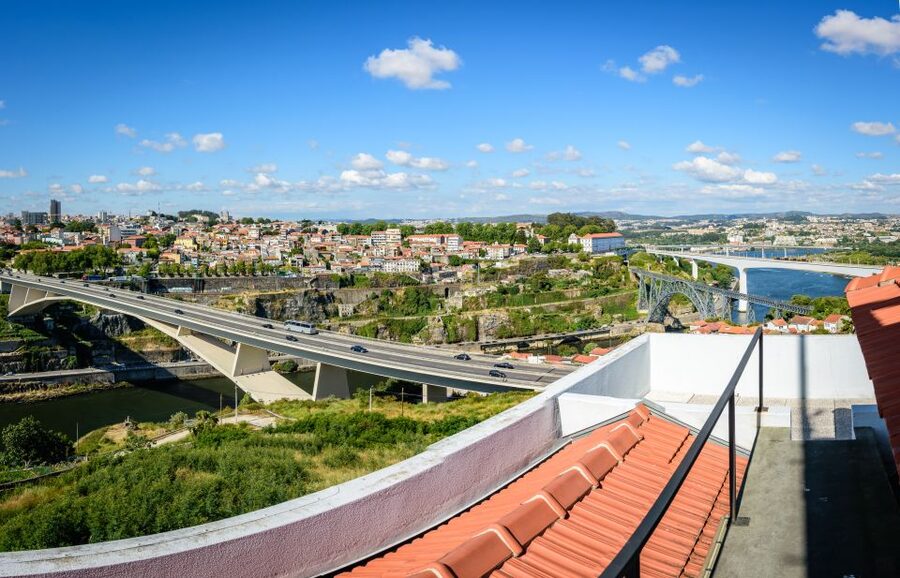
Porto’s six bridges are a fine sight from the river, but this tour takes you to a much less expected vantage point: a seismic station inside a historic institute in Gaia. Built in 1962, the station was part of a worldwide network tied to the Cold War, and it still offers a hands-on way to understand how instruments register earthquakes and nuclear tests.
I like two things in particular: the unusual mix of science and Cold War history, and the chance to hear it explained by geology students from the University of Porto. The tour also ends outdoors with a broad view of the six bridges linking Porto and Gaia, a memorable payoff for a compact visit.
The main consideration is the short format. You have about 35 minutes inside the institute, so this is a focused introduction, not a full museum visit or a detailed geology course. It is also not suitable for children under 12, and photography has limits.
Five things to know before you go
- The seismic station dates to 1962. It was built by the United States as part of a worldwide network of 127 stations.
- The Cold War story is central. Your guides explain the official scientific purpose and the arms-race context behind the network.
- You learn how seismic waves differ. The tour covers how earthquake signals compare with those produced by nuclear tests.
- The bridge view comes at the end. The outdoor stop offers a panorama of Porto and all six bridges connecting the city with Gaia.
- Plan for one hour in English. The visit includes short walks, a 35-minute guided tour, and five minutes set aside for the views.
A seismic station with a Cold War past
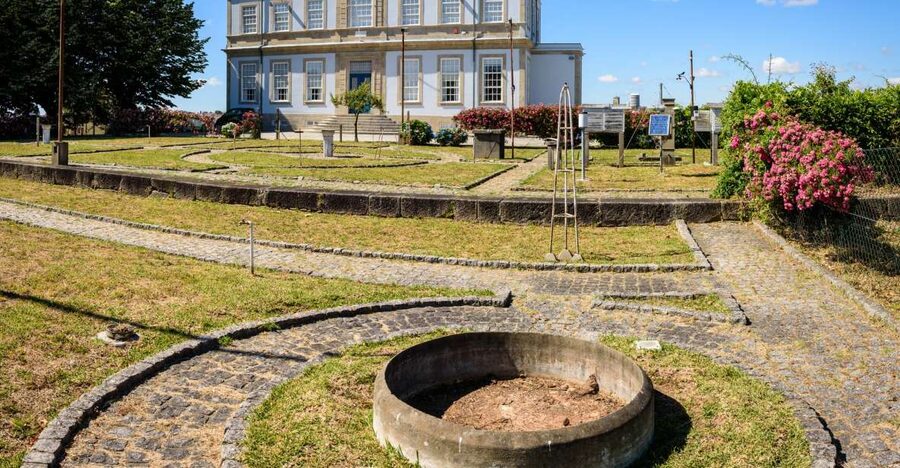
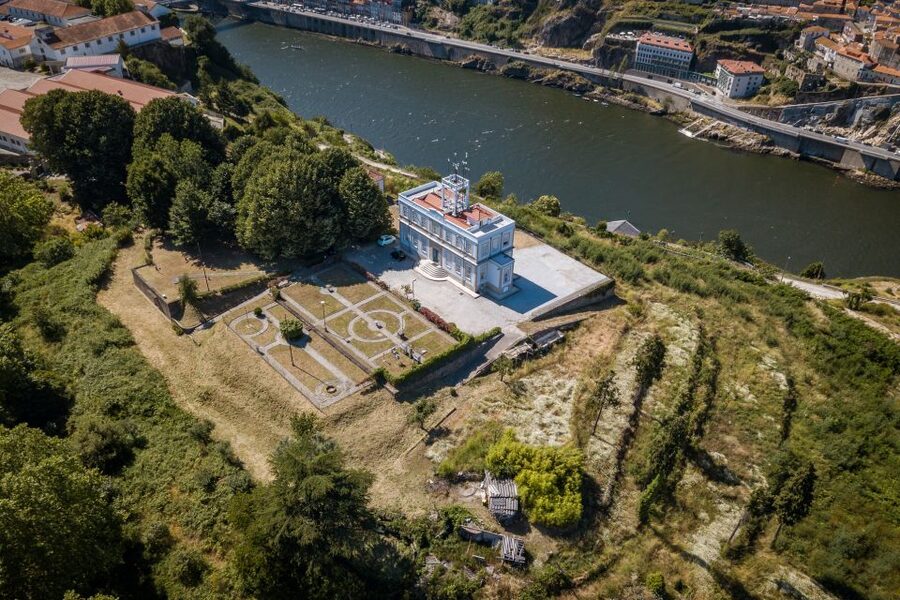
The Geophysical Institute sits in Gaia, on Serra do Pilar, behind the Monastery of Serra do Pilar. Founded in 1885, the institute’s centenary building can be easy to overlook amid the better-known sights across the river. Inside, though, is a station with a far wider story than its modest appearance suggests.
The station was built in 1962 by the United States and formed part of a global network of 127 seismic stations. Officially, the network was created for scientific research. The tour explores how its construction also fits into the Cold War rivalry between the United States and the Soviet Union, when both sides were deeply concerned with nuclear weapons and testing.
That double purpose gives the visit its hook. You are not just looking at scientific equipment; you are hearing how the same tools used to study earthquakes could also help detect nuclear tests. The guides discuss the account of the network’s creation, the nuclear arms race, and why seismic monitoring mattered to both science and international politics.
The subject is a good fit for visitors who like history with a technical edge. You do not need a background in geology: the guides explain the basic ideas, including how scientists use seismic waves and how an earthquake’s epicenter can be calculated. If you are expecting a long, technical lecture, however, the one-hour format sets a limit on how far any topic can go.
Also popular around Vila Nova De Gaia:
- Porto: Six Bridges Cruise
★ 4.2 · 11,680 reviews - Porto: Cálem Cellar Tour, Interactive Museum & Wine Tasting
★ 4.5 · 4,113 reviews - Porto: Taylor’s Port Cellars & Tasting
★ 4.6 · 3,374 reviews
Starting on R. 2 23
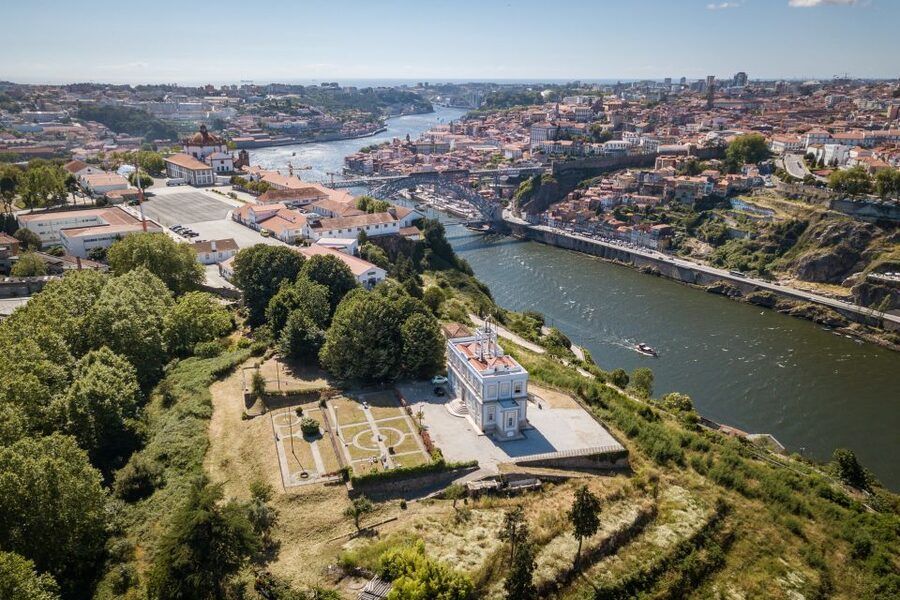
The meeting point is listed as R. 2 23, followed by a five-minute walk to the Geophysical Institute. The short approach helps keep the experience compact, but do check the meeting details when you book so you know where to begin. The tour is not designed as a half-day outing; it fits neatly around other plans in Porto or Gaia.
Once you reach the institute, the building itself sets the tone. It was established in 1885, and its long institutional history gives the visit a sense of place before the Cold War story even begins. This is not a purpose-built attraction with a large exhibition hall. The draw is access to a working scientific setting and a guide who can connect its equipment to the history behind it.
The visit’s short walks are part of the hour-long schedule, not a separate sightseeing route. Expect to spend most of your time inside, with the view saved for the end. That makes the experience especially practical if you want a concentrated activity rather than a long guided walk.
Inside the institute: 35 minutes of science and history
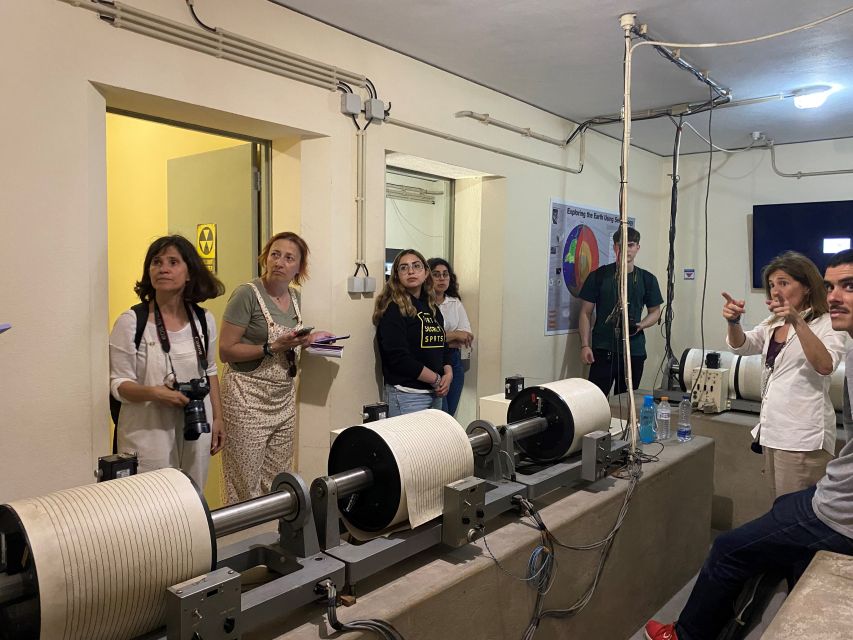
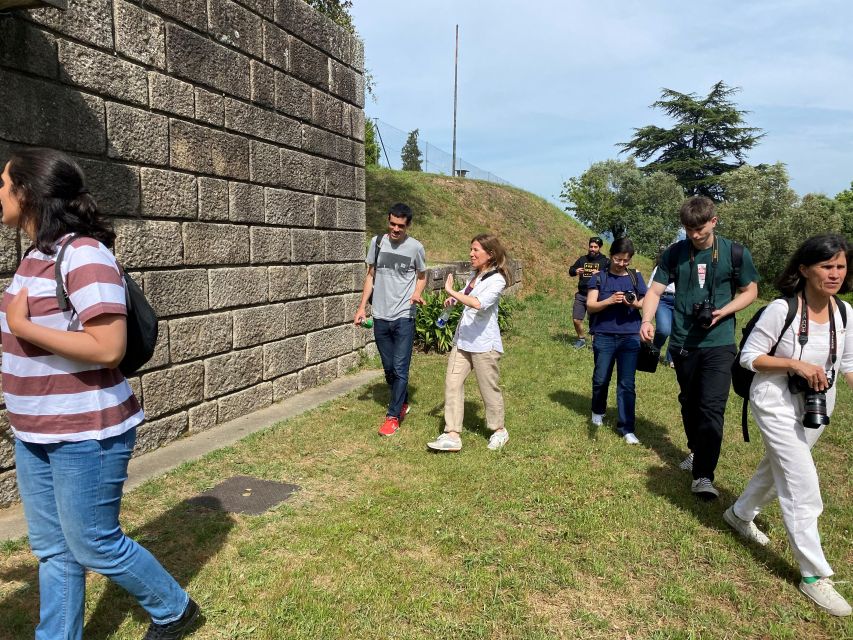
The guided portion lasts about 35 minutes. Geology students from the University of Porto’s Faculty of Sciences lead the tour in English, explaining both the institute’s role and the seismic station’s place in the Cold War story. Their student perspective suits the format: the subject is specialist, but the explanations are aimed at helping you follow the science rather than testing what you already know.
A central question is how a seismic station can register both natural earthquakes and nuclear tests. The tour explains that these events create seismic waves, then discusses the differences between the signals. That distinction is the practical heart of the visit. It shows why monitoring seismic activity is useful beyond earthquake research and why a network of stations could draw interest during a period of nuclear tension.
You also learn how scientists calculate an earthquake’s epicenter. The explanation gives you a clearer sense of what a network does: one reading alone is not the whole story, and comparing signals allows researchers to work out where an event began. The tour’s worldwide-network context makes that process easier to understand than a single instrument viewed in isolation.
The experience is strongest when the historical and scientific strands are taken together. The Cold War account explains why the station mattered politically; the seismology explains what the equipment could do. That pairing makes the hour more memorable than a simple tour of an old building.
There is one practical limit: the guided session is only 35 minutes, and the tour covers several subjects. You will get an accessible overview of the station, nuclear testing, earthquake signals, and epicenter calculation, but not an exhaustive technical lesson. If you already study seismology, you may want more depth. If you are curious but new to the subject, the brisk pace is likely to work in your favor.
Photography rules are also worth noting before you go. Flash photography and video recording are not allowed. You can still pay attention to the equipment and the guide’s explanation without trying to document every moment, but leave video plans behind.
The six-bridge view from Serra do Pilar
After the indoor visit, the route includes a short walk and about five minutes for scenic views. From Serra do Pilar, you can see Porto and Gaia spread out below, with the six bridges linking the two sides of the Douro. The panorama gives the tour a welcome change of pace after the science and history.
The view is not an unrelated add-on. It puts the institute’s location in context and offers a striking way to finish an hour spent indoors. The tour describes this as the only place on earth where you can see Porto’s six bridges, a bold claim, but the useful point for your visit is simple: this is a distinctive elevated viewpoint with all six in sight.
A small delicious surprise is also part of the outdoor finish, tied to celebrating the view. Its nature is not specified, so treat it as a bonus rather than a reason to book. The panorama is the reliable reward; the surprise is an extra.
If you want the best use of the final minutes, take time to look across both cities and spot the bridges rather than rushing straight back. The viewing stop is brief, so this is not a long photography session. And remember that the no-flash and no-video rules apply to the experience.
Prefer a different pace:
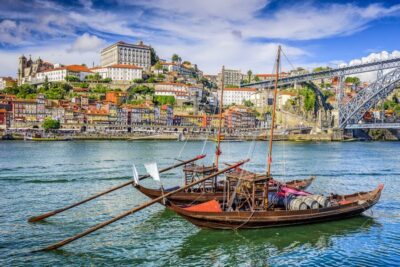
- Porto: Charming Sailboat Cruise with Port Wine,Sunset Option
★ 5.0 · 1,978 reviews - Porto: Burmester Cellar Tour with Tasting & Pairing Options
★ 4.4 · 1,534 reviews - Vila Nova de Gaia: Port Wine Tasting with Cheese Pairing
★ 4.8 · 1,074 reviews - Porto: 6 Bridges Port Wine River Cruise with 4 Tastings
★ 4.9 · 586 reviews
Is $17 good value for an hour?
At $17 per person, this is a fairly modestly priced guided activity, especially if you value a specialist subject and a setting you would not normally enter on a casual city walk. You get an English-language guide, access to the institute’s story and seismic station, an introduction to earthquake and nuclear-test signals, and a distinctive view over Porto and Gaia.
The value depends on your interests. If your Porto plans center on architecture, food, and riverside sights, the tour adds a different kind of context without taking much time. If you are especially interested in science, Cold War history, or both, the combination makes the price easier to justify. It is less compelling if you want a lengthy museum visit or an activity built around broad, hands-on exhibits; neither is part of the one-hour format described here.
The tour is offered in English and lasts about 60 minutes. It includes a five-minute walk to the institute, a 35-minute guided visit, another short walk, and time for the views. The schedule is compact enough to fit into a busy day, but you should not expect the outdoor stop or the indoor visit to stretch into a long exploration.
Children under 12 are not suited to this activity. Flash photography and video recording are not allowed. You can cancel up to 24 hours in advance for a full refund, and the reserve-now, pay-later option lets you hold a place without paying immediately. Starting times depend on availability.
Who should book this visit?
I would put this tour high on the list for anyone who likes unusual city stops, science explained in plain language, or Cold War history beyond the usual political landmarks. Its strongest feature is the connection between the station’s scientific function and its place in a tense period of international history. The six-bridge view adds an appealing finish and gives you a reason to visit this part of Gaia.
It is also a good option if you have only an hour to spare and want something more specific than a general sightseeing walk. Just go in knowing that the visit is short and focused. Book it for the station, the explanations, and the panorama, not for a lengthy museum experience. If that mix suits you, $17 buys a distinctive hour with a clear sense of place and purpose.
FAQ
How long does the visit last?
The visit lasts about one hour. The guided tour inside the institute is about 35 minutes, with short walks and time for the scenic view.
Where does the tour start?
The starting location is R. 2 23 in Gaia, followed by a five-minute walk to the Geophysical Institute.
What language is the tour in?
The tour is in English.
Who leads the visit?
Geology students from the Faculty of Sciences of the University of Porto guide the visit.
What is the Geophysical Institute?
It is an institute of the University of Porto, founded in 1885 and located in Gaia, behind the Monastery of Serra do Pilar.
When was the seismic station built?
The seismic station was built in 1962 by the United States.
What will I learn about seismology?
The visit explains how the station detects earthquake signals and nuclear tests, how their waves differ, and how scientists calculate an earthquake’s epicenter.
Can I take photographs or record video?
Flash photography and video recording are not allowed.
Is the tour suitable for children under 12?
No. The activity is not suitable for children under 12.
Can I cancel for a refund?
Yes. You can cancel up to 24 hours in advance for a full refund.
Just in around Vila Nova De Gaia
- Porto: Shared Douro River Sunset Cruise with Welcome Drink★ 4.5 · 35 reviews
- Private Boat Tour 6 Bridges 1h30, group price up to 6px★ 5.0 · 3 reviews
- Porto: The Best Douro Boat Tour★ 5.0 · 14 reviews
- Porto: Taylor’s Port Cellar Tour & WOW Museum Pack★ 4.7 · 24 reviews
- Porto: Private Douro River Bridges Cruise with Food & Wine★ 5.0 · 7 reviews
- Porto: Small-Group 6 Bridges Douro River Cruise w/ Drink★ 5.0 · 20 reviews
- Porto: Small-Group Douro River Sunset Cruise with Drink★ 4.9 · 27 reviews
- Porto Riverbank Tour on an e-bike: Atlantic Coast, Gardens★ 4.7 · 11 reviews
Vila Nova de Gaia Tours, compared.
Cálem Cellar Tour, Interactive Museum & Wine Tasting
Read our review →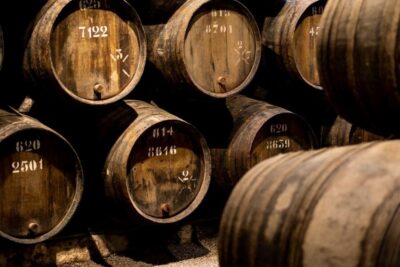
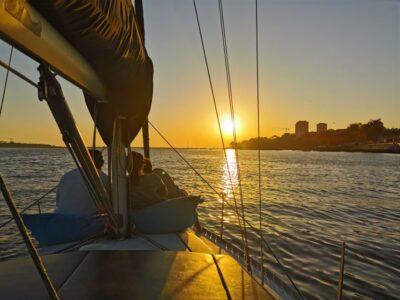
Charming Sailboat Cruise with Port Wine,Sunset Option
Read our review →
Burmester Cellar Tour with Tasting & Pairing Options
Read our review →
Vila Nova de Gaia: Port Wine Tasting with Cheese Pairing
Read our review →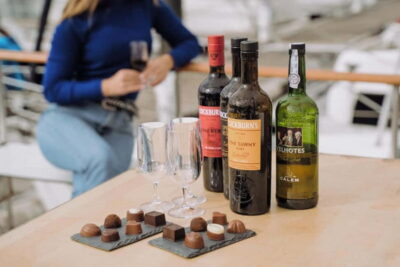
6 Bridges Port Wine River Cruise with 4 Tastings
Read our review →
Luxury Yacht Tour of the 6 Bridges and Douro Estuary
Read our review →Browse the lists this tour appears in