
Reviewed · VILA NOVA DE GAIA TOURS
Exclusive visit to the Astronomical Observatory of Gaia
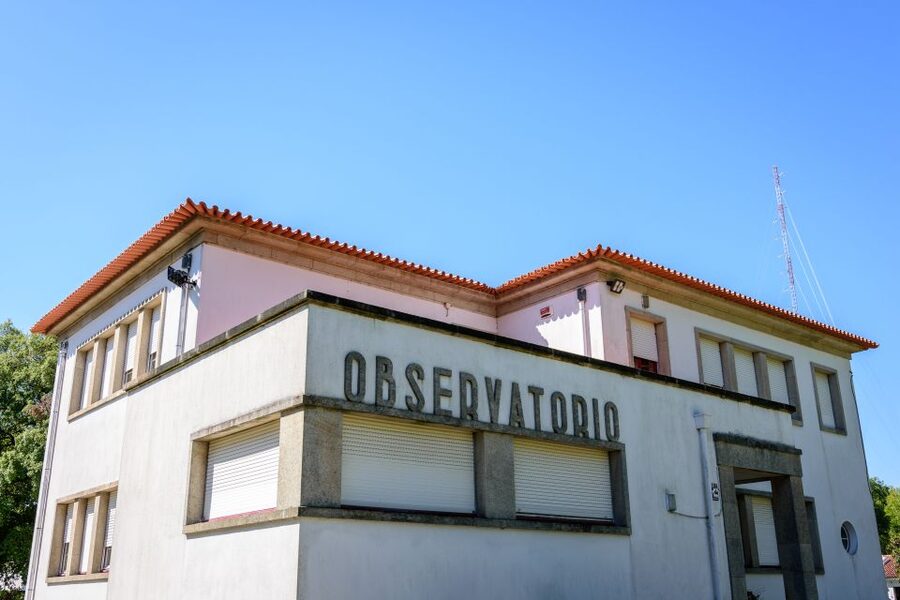
At the top of Monte da Virgem, Gaia’s discreet observatory has a building that opens its roof to the sky. Inside, the Mirror Meridian Circle once helped astronomers measure the passage of stars across the local meridian. It is an unusual place to think about time: not as a number on a clock, but as something people worked out by watching the heavens.
I like two things in particular: the chance to see an instrument found in only three places worldwide, and the guides, Physics students who bring their subject to a compact, human-scale visit. The tour also connects the observatory’s original role in astronomy teaching with the history of how people measured time.
One point to weigh before booking: this is a guided visit, not a night of stargazing. The equipment is not available for night observations on this experience, so book for the building, instruments, and explanation rather than a chance to look through a telescope at stars.
Key points to know before you go
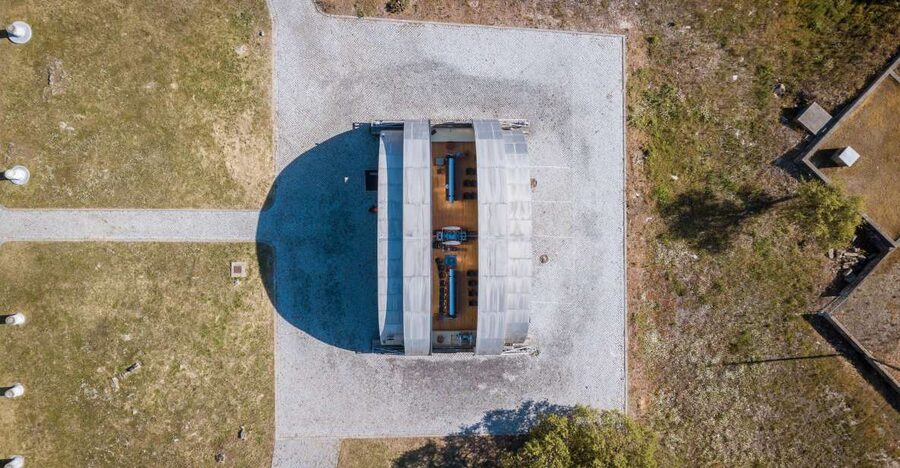
- The roof slides open: The observatory’s semi-cylindrical design was made to let astronomers observe the sky.
- The Mirror Meridian Circle is rare: It opened in 1957, nine years after the observatory was established.
- Timekeeping is the main theme: The tour explains how astronomers used the passage of stars to measure time.
- Your guide studies Physics: Guides are students from the Faculty of Sciences, and their enthusiasm is part of the appeal.
- Allow a full hour: The visit includes short walks and a 30-minute guided tour.
- This is not a night-sky session: Telescope use for night observations is not part of the experience.
A small observatory with an unusual purpose
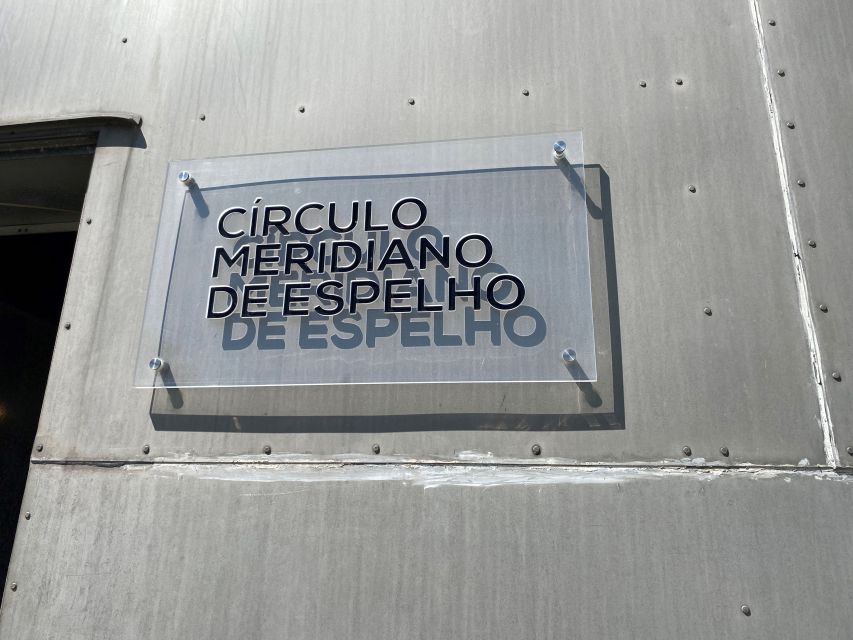
The Astronomical Observatory of Gaia sits on Monte da Virgem, in Portugal’s Norte Region. It is not a grand public museum built to impress from the street. Its interest lies in its purpose and its design: the building was created for observation, and its roof can slide open to expose the instruments to the sky.
The observatory dates to 1948, when it was established to support astronomy studies at the Faculty of Sciences. Its most notable instrument, the Mirror Meridian Circle, began operating in 1957. That gap matters. This is a place shaped by practical scientific work, not simply a collection of old objects arranged for display.
The Meridian Circle’s job was to observe stars as they crossed the local meridian, an imaginary line running from north to south through the sky. Watching a star pass that line gave astronomers a precise reference point for measuring time and position. The tour’s appeal comes from seeing how an observatory was built around that task.
The instrument is described as exceptionally rare, with only two others like it in the world. That makes the building more than an attractive curiosity. Its sliding roof and semi-cylindrical shape were part of a working arrangement between architecture and astronomy: the structure had to protect the equipment while allowing the sky to be observed.
Also popular around Vila Nova De Gaia:
- Porto: Six Bridges Cruise
★ 4.2 · 11,680 reviews - Porto: Cálem Cellar Tour, Interactive Museum & Wine Tasting
★ 4.5 · 4,113 reviews - Porto: Taylor’s Port Cellars & Tasting
★ 4.6 · 3,374 reviews
What the one-hour visit covers
The experience begins at the meeting point associated with postcode 4430-146, followed by a short walk to the observatory. The route includes a five-minute walk in and a five-minute walk back, with a 30-minute guided visit at the observatory. The full experience lasts about an hour, so leave room for the transitions rather than planning tightly around the half-hour tour itself.
That short walk is part of the visit, but the main event is indoors and around the observatory’s equipment. You are there to understand how the instruments worked and why the building was designed as it was. The visit is in English, led by a live guide.
A 30-minute guided section is a sensible length for a specialist site. It gives the guide time to explain the observatory’s purpose and the Meridian Circle without turning the visit into a long technical lecture. If you are especially interested in astronomy or the history of timekeeping, you may want to ask questions while you are there. The supplied details do not specify how much time is available for questions, so treat the guided portion as focused rather than open-ended.
The tour introduces two telescopes and asks what they were used for in the past and what role they have now. That is a useful thread to follow, but the specific functions of each telescope are not set out in advance. Go ready to listen and look closely, rather than expecting a technical inventory or a chance to operate the equipment.
The roof and the Meridian Circle
The building is one of the most memorable parts of the experience. Its semi-cylindrical form is not just an architectural flourish: the roof slides to allow precise observations. That makes the structure itself part of the scientific story. You can see how a working observatory had to be designed around a clear view of the sky.
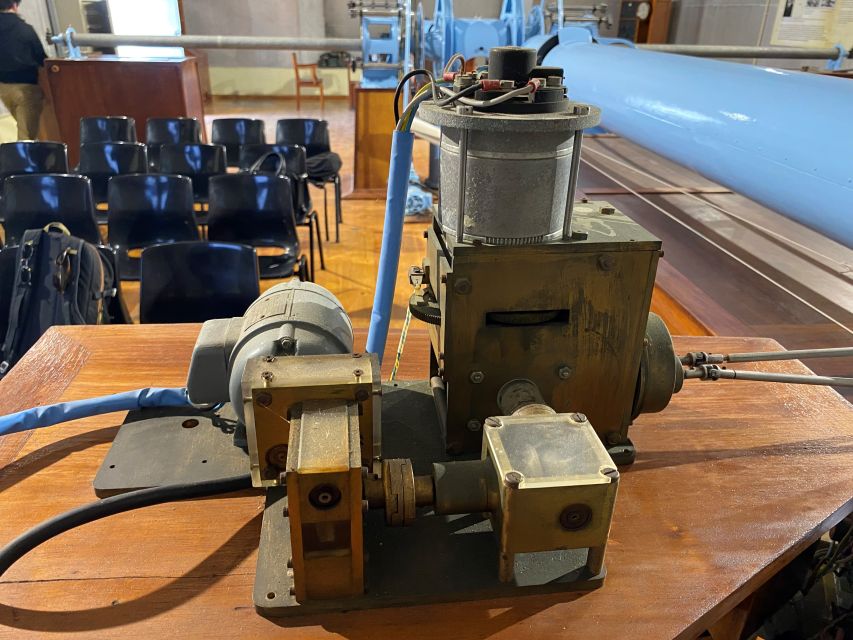
The Mirror Meridian Circle is the star instrument, though not in the sense of a telescope session. It was built to track the passage of stars across the local meridian. In an era before modern electronic timekeeping, repeated observations of celestial movement helped astronomers establish accurate time.
That change in perspective is what makes the visit worthwhile even if you are not an astronomy specialist. Time feels fixed in everyday life, but accurate measurement has depended on careful observation and purpose-built tools. Here, you can connect that abstract idea to a physical instrument and a building designed to make it work.
The observatory’s rarity gives the tour extra weight, but the experience is still modest in scale. You are not booking a large planetarium show or a broad survey of astronomy. You are visiting one particular site and learning why its instrument and architecture mattered. That focus is a strength if you enjoy specific, tangible history. It may feel narrow if you want a wide-ranging astronomy program.
Guides who bring science down to earth
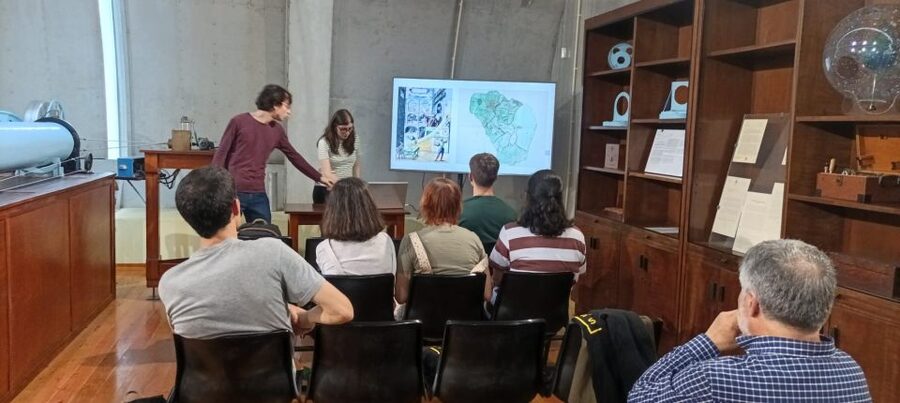
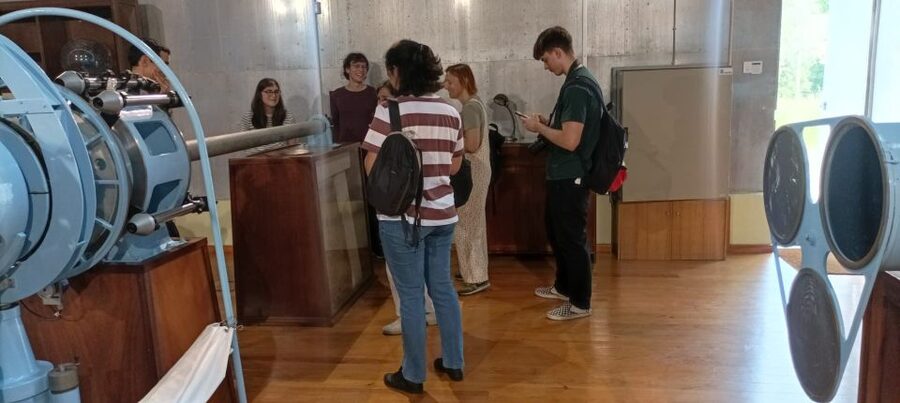
The guides are Physics students from the Faculty of Sciences. That detail suits the site: you are meeting people who study the subject, rather than receiving a generic overview from a guide with no connection to science. The available feedback particularly praises the guide’s passion in explaining the visit.
No guide names are provided, so there is no particular person to request. What you can expect is an English-language explanation from an enthusiastic student guide, with the observatory’s instruments and timekeeping at its center. The exact level of technical detail may depend on the guide and the questions you bring.
I would go with a little curiosity rather than a checklist of facts to memorize. Ask how the Meridian Circle observed a star crossing the meridian, what role the roof played, and how the two telescopes were used then and are used now. The experience is built around those mechanisms, so questions about how the equipment worked should help you get more from the short visit.
The guide’s enthusiasm matters especially in a small, specialist setting. An instrument can be impressive to look at but hard to understand without context. A clear explanation gives you a way to see the observatory as a working scientific place, rather than an odd room full of equipment.
Prefer a different pace:
- Porto: Charming Sailboat Cruise with Port Wine,Sunset Option
★ 5.0 · 1,978 reviews - Porto: Burmester Cellar Tour with Tasting & Pairing Options
★ 4.4 · 1,534 reviews - Vila Nova de Gaia: Port Wine Tasting with Cheese Pairing
★ 4.8 · 1,074 reviews - Porto: 6 Bridges Port Wine River Cruise with 4 Tastings
★ 4.9 · 586 reviews
What it does not offer: night observing
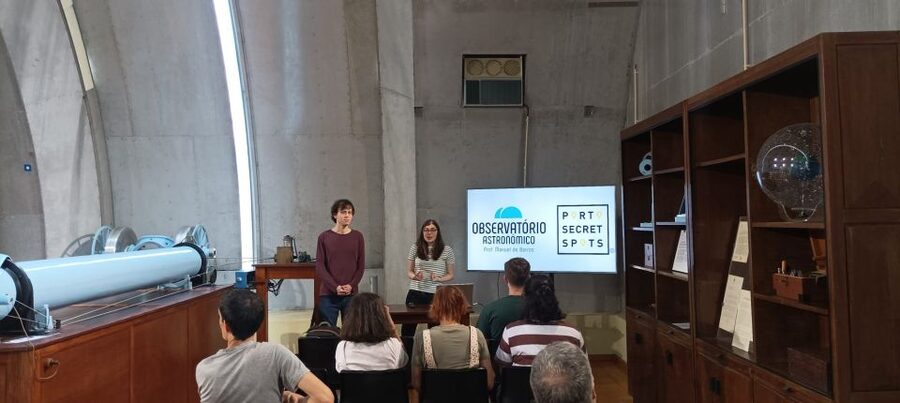
The most important expectation to set is that this is not a stargazing session. The equipment is not available for night observations as part of the experience, and you should not book on the assumption that you will use a telescope to see stars.
That distinction is easy to miss because the observatory is built for looking at the sky. But the focus here is the history and mechanisms of time measurement, along with the building and its instruments. The attraction is learning how astronomers observed the sky, not making your own observation through the equipment.
If you hoped to see stars through a telescope, this may be a disappointment. If you are happy to understand the tools and methods behind astronomical observation, the limitation need not spoil the visit. It simply defines what the experience is: a guided look at the history of astronomy and timekeeping, not a hands-on night session.
The activity is also not suitable for children under 12. That age limit makes sense for a focused explanation of scientific instruments, though families with younger children should choose another activity. Flash photography and video recording are not allowed, so bring your attention rather than a plan to document the visit on camera.
Is $17 a fair price?
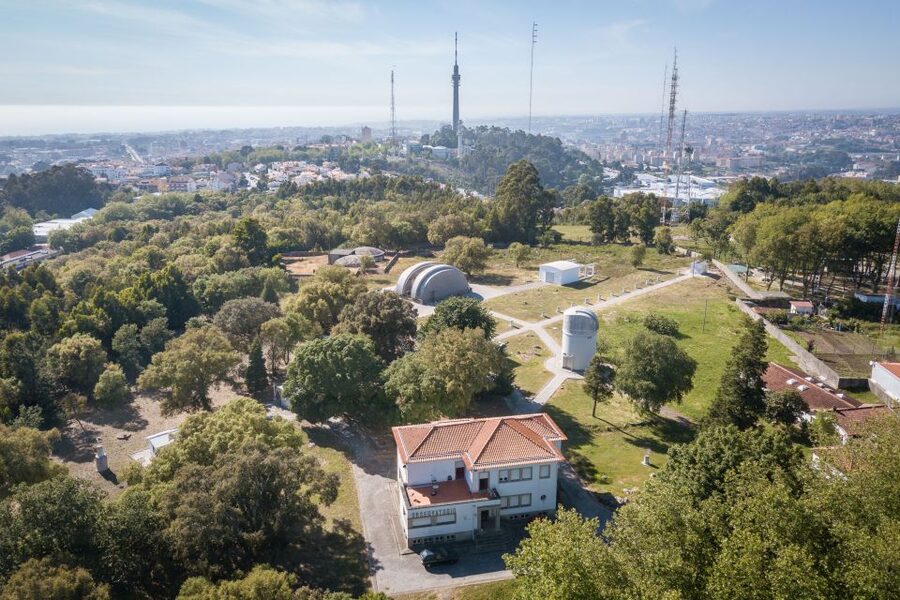
At $17 per person for about an hour, this is a fairly modest specialist visit. The value comes from access to an unusual observatory, a rare instrument, and a guide who can explain why the site exists. It is not a long tour, and there is no night-sky viewing or telescope use to add to the experience.
I would consider it good value if you enjoy science, old instruments, or the history of how people measured time. The rarity of the Meridian Circle gives the visit a clear point of difference from a general museum stop. For an astronomy enthusiast, the chance to see a purpose-built observatory and hear about its instrument may be worth the price on its own.
The calculation is less favorable if your priority is an extended activity or active telescope use. A 30-minute guided section within a one-hour visit is compact. You are paying for a focused explanation and access to a specific place, not a full evening program.
The booking terms add flexibility: you can reserve now and pay later, and cancel up to 24 hours in advance for a full refund. Starting times vary, so check availability before planning the rest of your day around it.
Who should book this observatory visit?
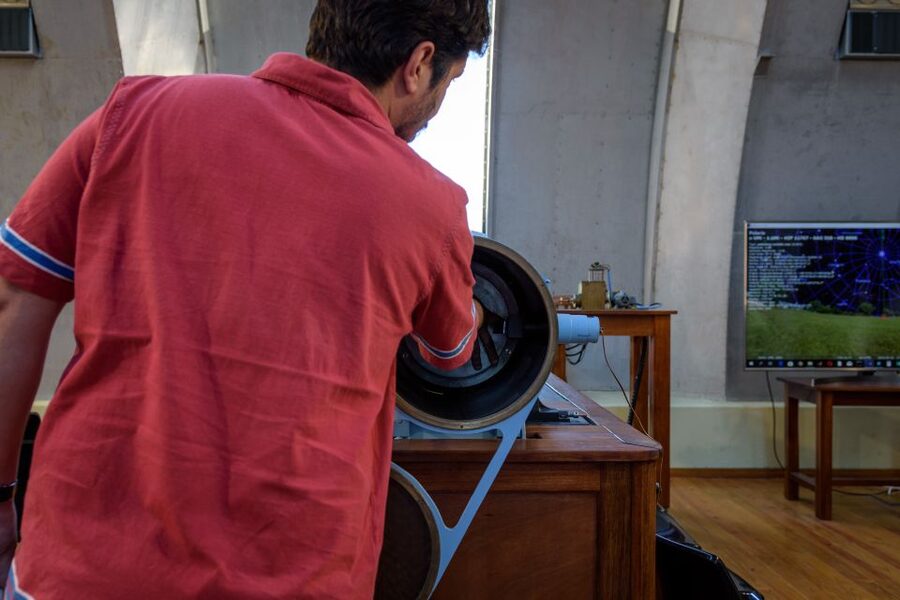
I would recommend it to adults and older children with an interest in astronomy, physics, historic instruments, or the practical problem of measuring time. It is especially suitable if you like small, focused visits where a guide explains one place in detail. You do not need to be an expert, but a little curiosity about how science works will help.
It can also suit visitors who want an unusual cultural stop in Gaia rather than another broad overview of the region. The observatory’s sliding roof and rare Meridian Circle give you a concrete story to take away: astronomers watched stars cross a defined point in the sky to measure time with precision.
I would skip it if your main goal is to look through a telescope at night, if you need a longer activity, or if you are bringing a child under 12. For everyone else, it is a thoughtful hour with a clear subject and a genuinely distinctive setting. Book it for the science and the story, not for a view of the stars through the lens.
FAQ
How long does the observatory visit last?
The experience lasts about 60 minutes. It includes short walks and a 30-minute guided tour.
What language is the tour in?
The guided visit is in English.
How much does the tour cost?
The stated price is $17 per person.
Where does the experience take place?
It takes place at the Astronomical Observatory of Gaia, on Monte da Virgem in Portugal’s Norte Region.
Will I be able to use a telescope to see stars?
No. Night observations using the equipment are not available as part of this experience.
What is the Mirror Meridian Circle?
It is a rare instrument used to observe stars passing across the local meridian. It opened at the observatory in 1957.
Is the tour suitable for children?
It is not suitable for children under 12.
Can I take photos or video?
Flash photography and video recording are not allowed.
Just in around Vila Nova De Gaia
- Porto: Shared Douro River Sunset Cruise with Welcome Drink★ 4.5 · 35 reviews
- Private Boat Tour 6 Bridges 1h30, group price up to 6px★ 5.0 · 3 reviews
- Porto: The Best Douro Boat Tour★ 5.0 · 14 reviews
- Porto: Taylor’s Port Cellar Tour & WOW Museum Pack★ 4.7 · 24 reviews
- Porto: Private Douro River Bridges Cruise with Food & Wine★ 5.0 · 7 reviews
- Porto: Small-Group 6 Bridges Douro River Cruise w/ Drink★ 5.0 · 20 reviews
- Porto: Small-Group Douro River Sunset Cruise with Drink★ 4.9 · 27 reviews
- Porto Riverbank Tour on an e-bike: Atlantic Coast, Gardens★ 4.7 · 11 reviews
Vila Nova de Gaia Tours, compared.

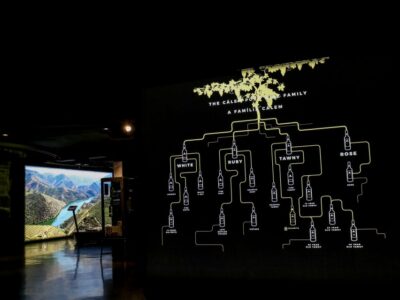
Cálem Cellar Tour, Interactive Museum & Wine Tasting
Read our review →

Charming Sailboat Cruise with Port Wine,Sunset Option
Read our review →
Burmester Cellar Tour with Tasting & Pairing Options
Read our review →
Vila Nova de Gaia: Port Wine Tasting with Cheese Pairing
Read our review →
6 Bridges Port Wine River Cruise with 4 Tastings
Read our review →
Luxury Yacht Tour of the 6 Bridges and Douro Estuary
Read our review →Browse the lists this tour appears in