
Reviewed · PORTO WALKING TOURS
Porto and Gaia: Walking Tour of Douro’s Two Riversides
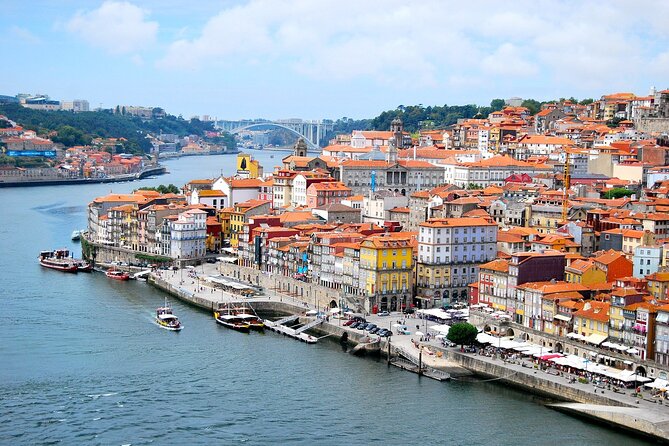
Porto’s story makes more sense when you cross the Douro and see Gaia as part of the same city experience. This two-hour walk links old Porto, its bridges and river customs, with Gaia’s wine cellars, monastery, and contemporary art. I like that it gives you both riverbanks in one compact outing, and that the guide connects familiar sights to the people and events behind them.
I also like the small group limit of 10, which suits a story-led walk better than a large procession. One consideration: two hours means a brisk route with several stops, and this is not suitable for wheelchair users. The tour may also be cancelled if fewer than four people book.
- Start at Henry the Navigator’s square: Meet beneath the statue, by the blue umbrella, and hear why this Porto-born figure matters to Portugal’s Age of Discoveries.
- See historic Porto up close: The route includes the Stock Exchange, Church of Saint Francis, Casa do Infante, Ribeira, and Barredo.
- Cross the Douro on foot: Walk over Dom Luís Bridge to Vila Nova de Gaia, where the tour shifts from Porto’s old lanes to wine-cellar history and modern art.
- Get context, not just landmarks: Expect stories about medieval walls, river customs, French invasions, royalty, Port wine, and urban change.
- Know what is not included: There is no winery visit, food, drink, or hotel transport.
A two-bank walk with a clear purpose
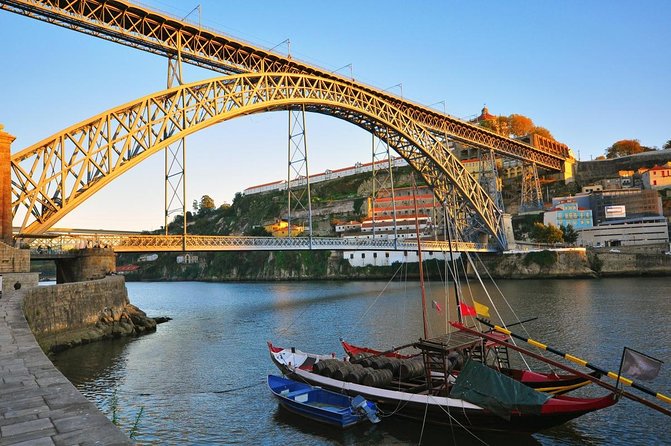
This is a compact orientation walk built around one useful idea: Porto and Gaia may be separate municipalities, but their histories and daily life are tied together by the Douro. Rather than spending the whole tour on one side, you get an introduction to both. That is the experience’s main strength, especially if you have limited time or want a first look before exploring further on your own.
The walk begins in Jardim do Infante Dom Henrique, the square named for Henry the Navigator, also known as the Infante of Sagres. He was born in Porto and is closely linked with Portugal’s Age of Discoveries. Your guide uses the square to explain how the country’s maritime ambitions grew into an empire spanning four continents. It is a useful way to start: the story is large, but the setting is local.
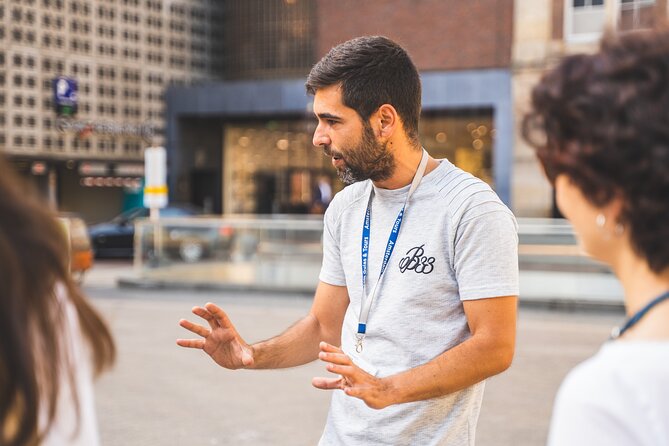
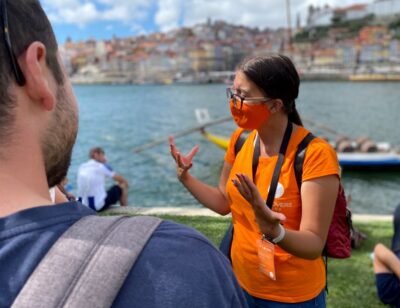
The group is limited to 10 people, and the guide speaks English or Spanish. A guide named Eric, also called Oso, has been associated with the experience. If he is leading your departure, the personal, story-focused approach may be a particular draw, but guides can vary. The key point is that the walk depends on narration as much as on the buildings themselves.
At the Infante’s square: trade, faith, and a local birthplace
The first part of the route stays close to the starting square. The Palacio da Bolsa, or Porto Stock Exchange, is described as Portugal’s first stock exchange and one of the city’s architectural highlights. The guided stop is listed as 15 minutes, so expect an introduction rather than an extended visit. It helps set up a recurring theme of the tour: Porto’s identity was shaped not only by explorers and rulers, but also by trade.
Casa do Infante follows, also with a 15-minute guided stop. The house is linked to Henry the Navigator, and the guide uses it to add a local dimension to the story of Portuguese expansion. The appeal is not simply seeing an old building. It is connecting a figure associated with a global age to the city where he was born.
The Church of Saint Francis adds a different kind of history. Faith has long shaped Portuguese culture, and this church is presented as one of the country’s most beautiful. You have about 15 minutes here with the guide. That is enough to hear why the church matters and take in its setting, but do not expect a long, self-guided visit or time to linger at every detail.
These early stops make the tour a good fit if you like a broad account of a place rather than a single subject. You move from commerce to religion to exploration, with the guide supplying the links. If you prefer to spend an hour inside one monument, this fast-moving format will feel too brief.
More walking tours around Porto:
- Porto Walking Tour, Lello Bookshop, River Cruise and Cable Car
★ 5.0 · 3,354 reviews - Experience Porto’s Charm: 3-Hour Guided Walking Tour
★ 5.0 · 2,432 reviews - Porto: 3-Hour Guided City Highlights Walking Tour
★ 4.8 · 2,050 reviews
Ribeira and Barredo: old streets, new pressures
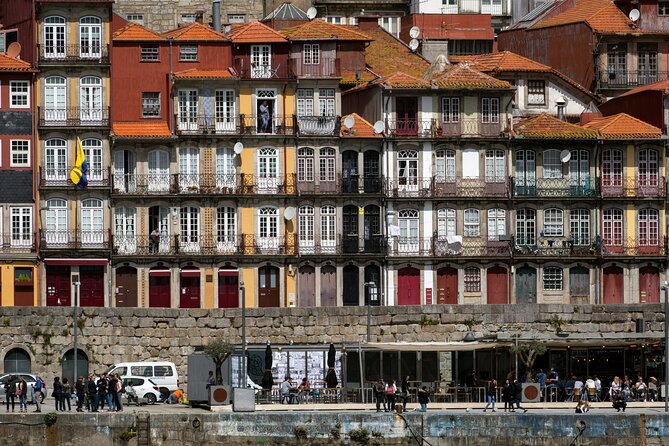
From the grander landmarks, the route turns toward Ribeira and Barredo, Porto’s oldest neighborhoods. Here the subject shifts from national history to street-level change. Your guide covers the past and present of these districts, along with the future they face as tourism and gentrification reshape historic streets.
That conversation gives the walk a contemporary edge. Old quarters are not museum pieces; people live and work in them, while visitor demand changes how they function. The tour does not promise a detailed study of housing or urban policy, but it does make those pressures part of the story. I value that kind of context because it helps you look beyond picturesque façades and ask what keeps a neighborhood alive.
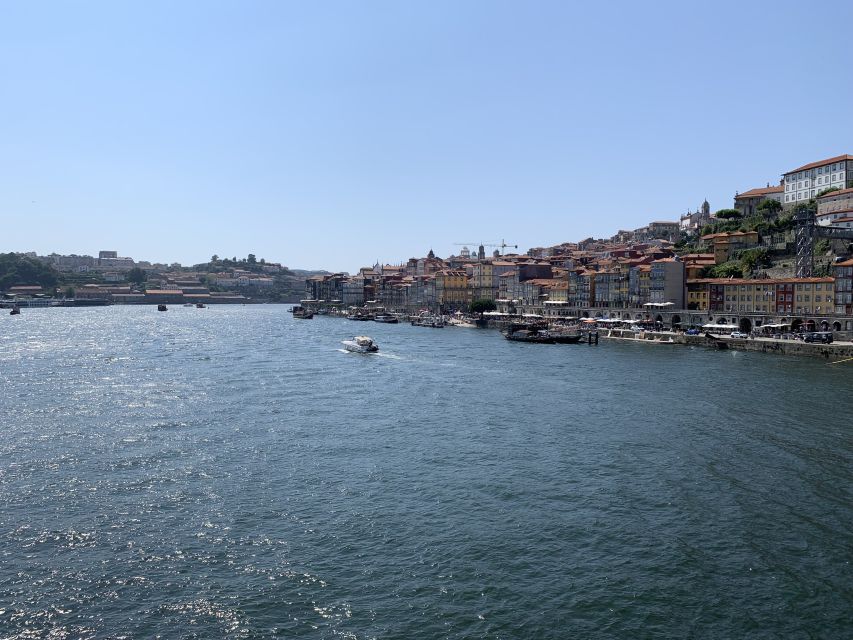
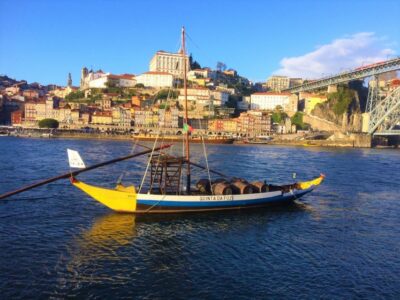
The Cais da Ribeira stop is listed for 15 minutes. The riverfront is a natural place to discuss the Douro’s role in Porto’s growth. The river was a source of life and trade, and the city grew along its banks. You will hear how local customs and the river’s practical importance shaped the city, rather than treating the water as scenery alone.
The tour also touches medieval Porto, including its walls, gates, and customs. Those details help explain how a river city organized itself and defended its territory. The route includes the Alminhas of the Bridge, another 15-minute guided stop, where stories of the river crossing connect with legends, heroes, and past conflicts.
Dom Luís Bridge: a crossing with a story
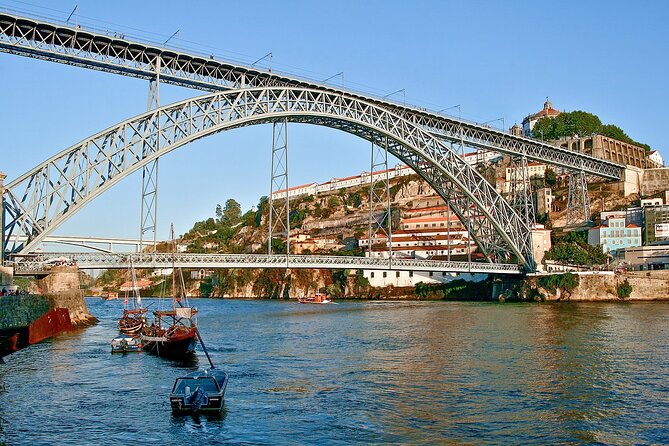
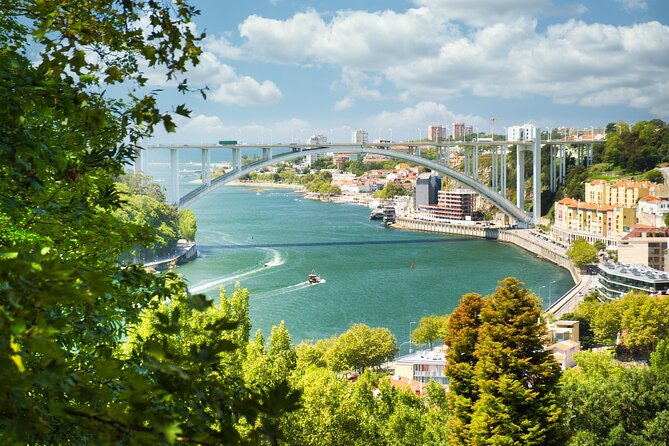
The walk reaches Dom Luís Bridge before crossing to Gaia on foot. Bridges are more than convenient links here: they are part of the shared story of the two riverbanks. Your guide is set to discuss bridges alongside French invasions, royalty, legends, heroes, and villains. That mix gives the route room for both documented history and local lore.
The crossing itself is listed as a 10-minute walk. It is a practical change of scene, moving you from Porto’s older riverside neighborhoods to Vila Nova de Gaia. The bridge is also a natural pause in the tour’s narrative. You can see the Douro from above and understand why the two towns are often experienced together, even though Gaia is technically separate from Porto.
Keep in mind that this is a walking tour, not a scenic transport ride. You need to be comfortable moving between stops and crossing the river on foot. The route is not suitable for wheelchair users, and the supplied information does not describe step-free access or a modified route.
Gaia: Port wine, a monastery, and a half rabbit
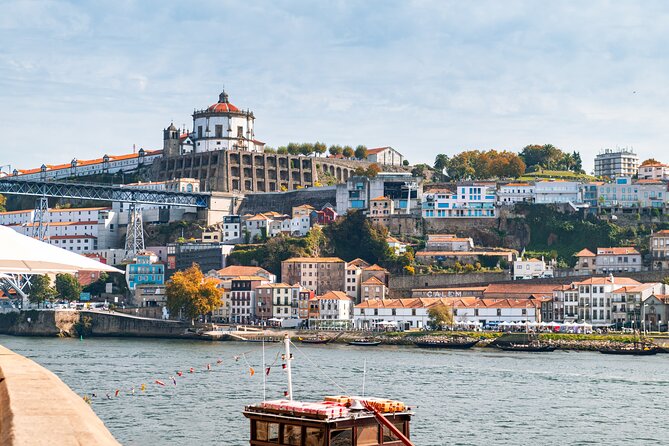
In Gaia, the focus broadens from old Porto to the city’s wine trade and changing public spaces. The guide introduces the famous wine cellars and explains why Port wine is distinctive, including why it is neither simply ordinary wine nor just a name for the city. There is no winery visit or tasting, so think of this as a history lesson about Port rather than a cellar tour.
The route also includes the Serra do Pilar Monastery, a UNESCO World Heritage Site. It is an important marker on the Gaia side and adds a religious and architectural dimension to the walk. The supplied route does not specify a separate guided stop length for the monastery, so treat it as part of the Gaia exploration rather than assuming there is time for an extended visit inside.
Modern urban art provides a striking contrast. The Half Rabbit sculpture is singled out as a contemporary work that adds a different mood to the historic streets. It is an example of how the city’s public spaces continue to change, and a welcome counterpoint to churches, convents, and wine-cellar traditions.
The final listed guided stop is the Corpus Christi Convent, with 15 minutes set aside. It is described as historic and steeped in legend. Placed alongside the modern sculpture, it neatly captures the tour’s range: old customs and religious history on one side, newer art and urban life on the other.
The walk ends at Cais de Gaia, at Cais de Gaia 19. That finish makes sense if you want to remain on the Gaia side after the tour, though the experience does not include transport back to your hotel or to Porto.
More around Porto worth booking
- The Unvanquished Tour in Porto City Center
★ 5.0 · 26,497 reviews - From Porto: Douro Valley w/ Boat Tour, Wine Tasting & Lunch
★ 4.7 · 19,061 reviews - Complete Douro Valley Wine Tour with Lunch, Wine Tastings and River Cruise
★ 5.0 · 12,920 reviews - Porto: Live Fado Show with Glass of Port Wine
★ 4.8 · 6,498 reviews
What two hours can, and cannot, give you
The listed stops are generally 15 minutes each, with a 10-minute crossing, while the advertised tour duration is two hours. That is a lot of ground and storytelling in a short window. You should expect a brisk overview, not long visits at every site. The payoff is range: you get a connected introduction to Porto and Gaia without setting aside half a day.
At $32 per person, the value rests on the guide’s ability to make the route coherent. You are paying for a hosted walk through two historic centers, with explanations of the landmarks, the river, Port wine, and current changes to old neighborhoods. You are not paying for entry to a winery, meals, drinks, hotel pickup, or a full interior tour of every stop.
For a first visit, that can be a sensible trade. The guide gives you a framework for choosing what to revisit later, and crossing the river makes the tour more useful than a Porto-only stroll if Gaia is on your list. If you already know the main landmarks and want detailed access to monuments or wine cellars, you may get more from booking those visits separately.
The tour’s rating is 4.4 from three reviews, a small sample. One Spanish-language account gives particular credit to guide Eric, nicknamed Oso, and describes the walk as a different way to get to know both riverbanks. That points to the experience’s strongest feature: the guide’s storytelling and the unusual combination of Porto and Gaia in a single walk. It is not enough feedback to promise the same guide or style on every departure.
Practical details before you book
The meeting point is at the foot of the statue in Jardim do Infante Dom Henrique, by the blue umbrella. The tour is offered in English or Spanish, and the group is capped at 10 participants. Food and drinks are not included, so plan those separately if you want a meal before or after the walk.
The walk involves some walking and is not suitable for wheelchair users. The tour may be cancelled if fewer than four participants are booked. You can cancel up to 24 hours in advance for a full refund, and the reserve-now, pay-later option lets you hold a place without paying immediately.
Should you book this Porto and Gaia walk?
Book it if you want a compact, guided introduction to Porto’s oldest districts and Gaia’s riverside identity, with a guide to connect the river, monuments, Port wine, and urban change. It is particularly useful for a first visit when you want to understand how the two banks fit together before exploring at your own pace.
Skip it if you need wheelchair access, want a winery visit or tasting, or prefer long, unhurried time inside individual sites. At $32, it offers good value for a small-group, two-sided city overview, provided you are happy with a brisk walk and stories rather than a string of extended monument visits.
FAQ
How long is the walking tour?
The tour lasts two hours.
What is the price?
The listed price is $32 per person.
Where does the tour start?
It starts at Jardim do Infante Dom Henrique, at the foot of the statue by the blue umbrella.
Where does the tour finish?
It finishes at Cais de Gaia 19 in Vila Nova de Gaia.
Which languages are available?
The guide speaks English or Spanish.
How many people can join?
The group is limited to 10 participants.
Does the tour include a winery visit or tasting?
No. The guide discusses Port wine and Gaia’s wine cellars, but there is no winery visit.
Are food and drinks included?
No. Food and drinks are not included.
Is the tour suitable for wheelchair users?
No. The tour is not suitable for wheelchair users and involves walking.
Can the tour be cancelled if the group is small?
Yes. It may be cancelled if fewer than four participants are booked.
Just in around Porto
- Porto : Private Tour of the Historic City in a Classic Ford T★ 5.0 · 13 reviews
- Workshop Nate Pastel and Cocktails in Porto★ 5.0 · 64 reviews
- Pastel de Nata Workshop in Porto★ 5.0 · 127 reviews
- Private Tour to Lamego and Viseu, the Dão wine region★ 5.0 · 3 reviews
- Douro Valley Private Day Trip including Boat Ride & Wine Tasting★ 5.0 · 96 reviews
- Porto City Tour with Wine Tasting★ 3.5 · 30 reviews
- Paiva Walkways & Arouca Suspension Bridge – All Inclusive!★ 5.0 · 62 reviews
- Adventure Paiva Passages: Suspension Bridge and Picnic | Porto★ 4.5 · 4 reviews
Porto Walking Tours, compared.
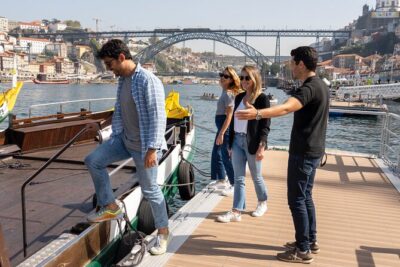
Porto Walking Tour, Lello Bookshop, River Cruise and Cable Car
Read our review →
Experience Porto’s Charm: 3-Hour Guided Walking Tour
Read our review →


Walking Tour, Lello Bookshop, Boat and Cable Car
Read our review →Browse the lists this tour appears in