Reviewed · PORTO TOURS
Workshop Nate Pastel and Cocktails in Porto
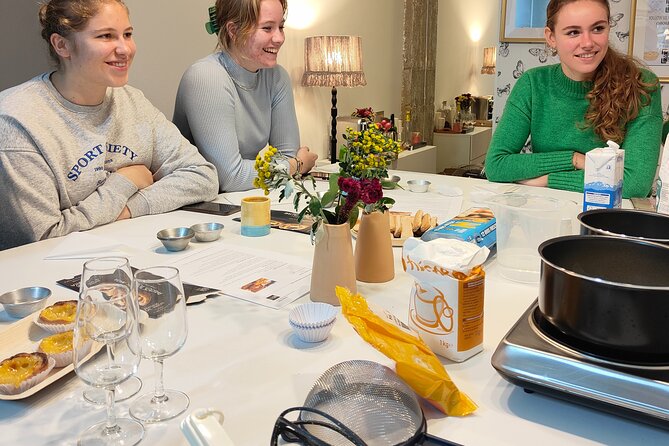
The pleasure here is in turning Porto’s famous custard tart into a shared kitchen project. In about 90 minutes, you’ll help make pastel de nata, hear how this convent sweet became a Portuguese classic, and take two pastries home.
I like two things in particular: the small group, which gives everyone a task and room to ask questions, and the relaxed wait while the pastries bake, with music, conversation, and a regional-style cocktail. Hosts including Patricia, Maria, Anna, and Anne have led sessions, though the instructor can vary.
One point to understand before booking: you won’t make the pastry dough from scratch. It needs about three hours before it is ready to use, so the host prepares it in advance. You still learn the recipe and work on other parts of the tart.
At a glance
- A hands-on pastry session: The host divides recipe tasks among the group, so you take part rather than simply watch.
- Dough made ahead: The pastry itself needs several hours to prepare, and the workshop uses dough that is ready to work with.
- Cocktails during the bake: Drinks, music, and conversation fill the time while the natas cook.
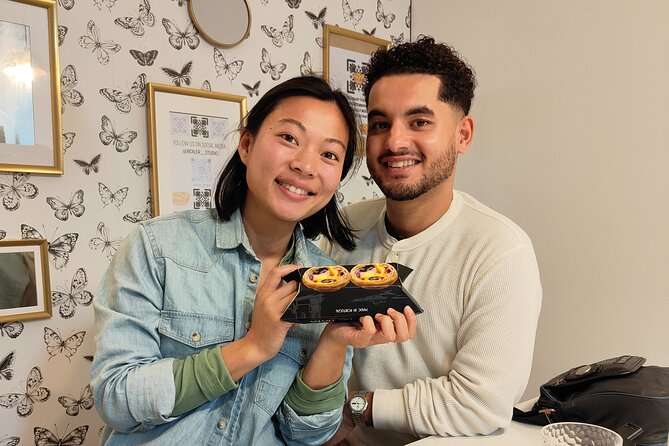
- Two pastéis to take away: You taste the finished pastries and leave with two of your own.
- A small class in central Porto: The group is capped at eight, at R. Chã 77.
- A recipe for home: The host explains the method and gives each participant the recipe.
A Porto pastry lesson, not a full baking course
Pastel de nata is a familiar sight in Portuguese cafés, but knowing it as a snack and knowing how its layers and custard come together are different things. This workshop gives you a friendly introduction to the pastry without asking you to spend half a day in a kitchen.
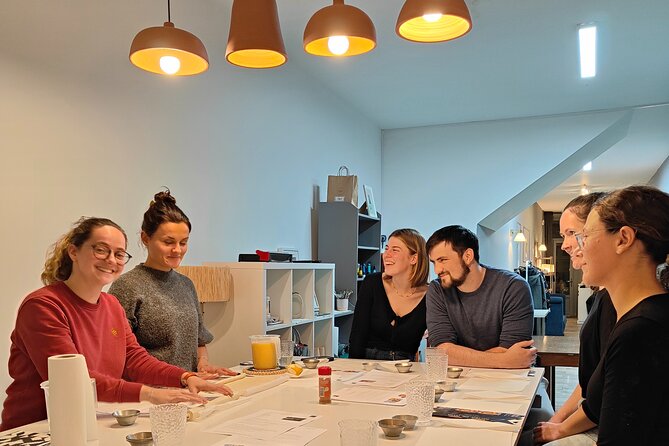
The format is collaborative. Rather than each person making a complete batch from start to finish, the host shares out the recipe’s tasks among the people at the table. You get practical time with the ingredients and techniques, and you can see how separate steps fit together.
That division makes the class approachable if you’re new to baking. It also means you should not expect to make every element yourself. If doing every task is important to you, you can ask about booking a private workshop.
The class lasts around an hour and a half. That is enough time for a clear introduction, hands-on work, a little background on the pastry, and a tasting, without taking over an entire Porto afternoon.
More hands-on workshops around Porto:
- Porto: Pastel de Nata Pastry-Making Workshop
★ 4.9 · 1,542 reviews - Porto: Pastel de Nata Cooking Class with Port Wine – Sé
★ 4.8 · 888 reviews - Porto: Small Group Surf Lesson with Transportation
★ 4.9 · 594 reviews
Starting at R. Chã 77
The workshop begins and ends at R. Chã 77, in central Porto. The address is described as easy to find and close to the heart of the city, making this a practical activity to fit between sightseeing and a meal.
The location is near public transportation. You receive the exact meeting address when you book, and the activity returns to that same point rather than sending you on to another part of town.
The space is set up for a small group around a table. That creates an easy setting for chatting as you work, and it helps the host give people individual direction. One thing to keep in mind is that the studio may share space with another class. If another activity is running at the same time, the room can feel noisier than a dedicated private kitchen.
Sharing the recipe’s tasks
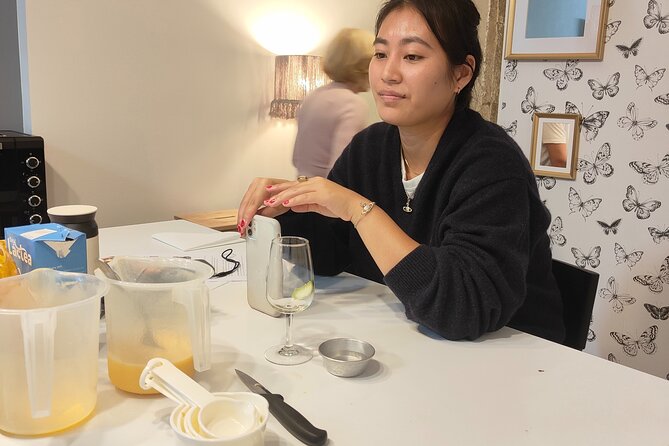
Once everyone has arrived, the host introduces the recipe and assigns tasks around the group. The exact jobs depend on the recipe and the people present, but the idea is consistent: each person contributes to the pastries rather than standing back to watch a demonstration.
The host explains how the steps work and offers tips as you go. Patricia is often singled out for clear instructions, humor, and a knack for drawing everyone into the activity. Other sessions have been led by Maria, Anna, or Anne, so the instructor’s name can vary.
You don’t need to arrive with baking experience. The process is designed to be easy to follow, and the host can guide you if a step feels unfamiliar. That support is useful for families with older children, couples, friends, and groups who want to make something together rather than compete over who has the best pastry technique.
The task-sharing approach has a trade-off. You’ll learn by doing, but you may not personally handle every stage. Think of it as a guided group lesson in the method, not a solo masterclass where each participant produces a full batch independently.
Why the dough is ready in advance
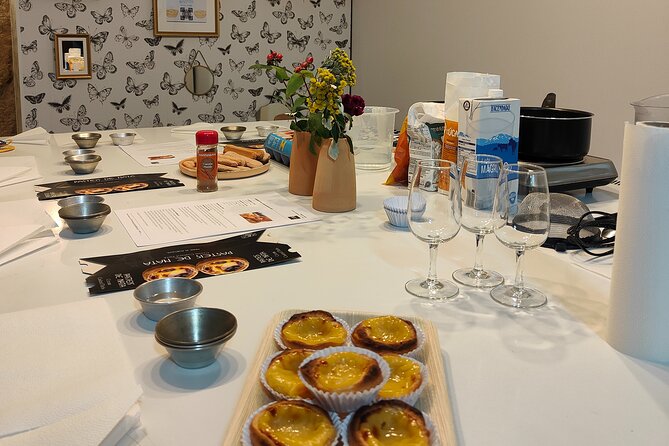
The main limitation is also a practical kitchen fact: the pastry dough takes about three hours to become ready to use. Since the workshop lasts only 90 minutes, the host prepares it ahead of time.
That doesn’t mean the recipe is a secret. You receive it, and the host explains how to make the dough yourself at home. For a short class, this is a sensible compromise: you get to work on the pastry and understand the method without waiting around for dough preparation.
If your main goal is learning every step with your own hands, contact the host about a private workshop before booking. For most people, the shared format is a good fit. It keeps the session lively and gives you a workable recipe to try again later.
More around Porto worth booking
- The Unvanquished Tour in Porto City Center
★ 5.0 · 26,497 reviews - From Porto: Douro Valley w/ Boat Tour, Wine Tasting & Lunch
★ 4.7 · 19,061 reviews - Complete Douro Valley Wine Tour with Lunch, Wine Tastings and River Cruise
★ 5.0 · 12,920 reviews - Porto: Live Fado Show with Glass of Port Wine
★ 4.8 · 6,498 reviews
The bake, cocktail, and pastry story
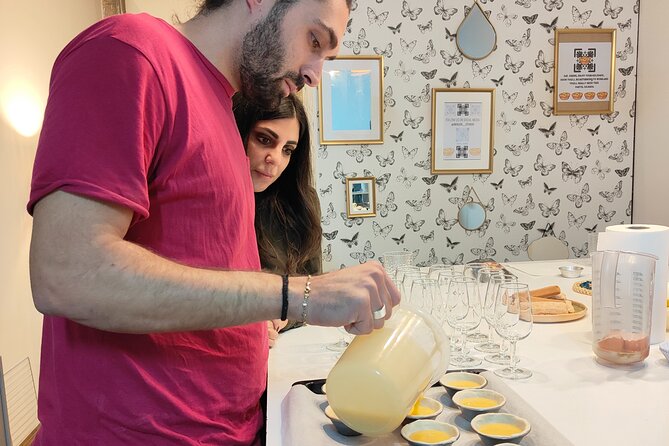
When the natas go into the oven, the mood shifts from cooking to conversation. Music plays, and the host serves a cocktail while the pastries bake. Drinks mentioned in the sessions include white port and tonic, port, and champagne, but the exact options may vary.
This pause is part of the appeal. Instead of treating baking time as dead time, the workshop uses it for a drink, a chat, and a short account of the pastry’s history. The host also talks about things to do in Porto, which can be useful if you’re still planning your days in the city.
The lesson places pastel de nata in the context of Portugal’s convent sweets. That background gives the pastry a little more meaning than a recipe alone, without turning the workshop into a long lecture. The balance is practical: make something, hear where it comes from, then eat it.
The cocktail is a pleasant extra, not the main reason to book. If you don’t drink alcohol, check with the host about options before you go; the details provided do not specify non-alcoholic choices.
Tasting and taking two home
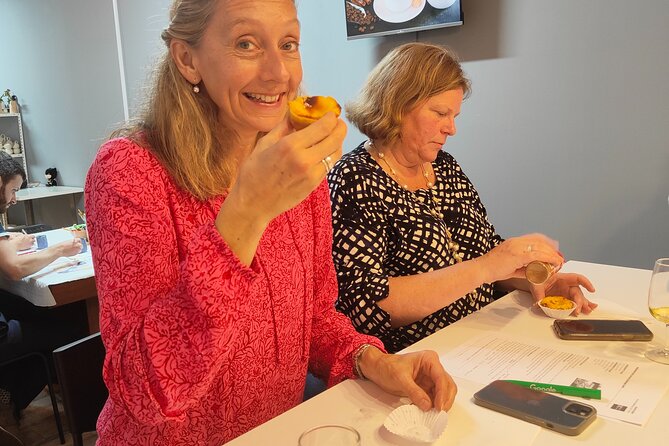
At the end, the group samples the finished pastries, and each participant takes two along. That gives you a taste at the table and a small edible souvenir for later. The recipe comes home with you, too, so the value extends beyond the hour and a half in the studio.
The class is social by design. You’re likely to share the table with people from different countries, and cooking gives everyone an easy way to start talking. If you’re in Porto with friends or family, it can be a pleasant change from walking and looking at buildings all day. For a company group, the shared tasks also provide a simple team activity.
The end product matters, of course. But the real payoff is learning a method you can attempt again, and understanding why the dough is prepared ahead. Don’t expect to leave with a box of pastries for the whole week. You take two, and the class is brief.
Is $42.24 good value?
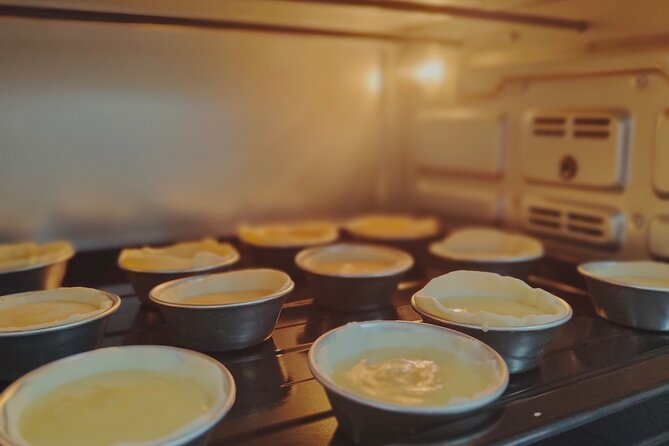
At $42.24 per person, this is more than a quick pastry purchase at a café, but it includes a guided cooking activity, a drink, a tasting, two pastries to take away, and the recipe. You’re also paying for a small class and the chance to ask questions while you work.
The value depends on what you want. If you’re looking for a full-scale cooking course or a session where each person makes every part of the recipe alone, this may feel limited. If you want a light, social activity that teaches you the basics and adds a local food story to your Porto visit, the price is easier to justify.
It is typically booked about 16 days ahead. That is a useful signal to plan early if the date matters to you, especially since the class requires a minimum number of participants to run. The stated group maximum is eight, which keeps the class small but also means places may be limited.
Who should book this workshop?
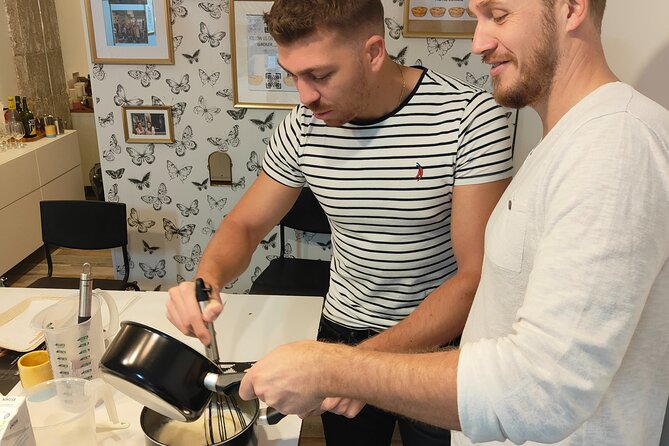
I’d choose this class if you enjoy cooking with other people, want an easy introduction to a Portuguese sweet, or need a relaxed activity that fits into a half-day of sightseeing. It also suits you if you like taking home a recipe you can try again rather than simply watching a chef work.
It’s a particularly good option for friends, couples, and families with older children who can take part in a group activity. A 14-year-old has been able to participate, but no minimum age is specified, so ask the host if you’re booking for a younger child.
Consider another activity if your priority is advanced pastry technique, a long hands-on course, or complete control over every step. Here, the dough is ready when you arrive, the tasks are shared, and the emphasis is on a pleasant group session as much as on instruction.
The workshop is offered in English. Service animals are allowed, and the meeting point is near public transportation. You can cancel for a full refund up to 24 hours before the start; later cancellations are not refunded, and changes within 24 hours are not accepted.
Should you book it?
Book if you want a compact, sociable taste of Portuguese baking, with a clear recipe, a drink during the bake, and two pastries to take away. The host-led, task-sharing format makes it easy to join in even if you don’t bake often.
Skip it if your ideal class means making pastry dough from scratch or completing every recipe step yourself. For most food-curious visitors, though, this is an appealing way to spend 90 minutes in Porto: hands-on enough to learn something, relaxed enough to enjoy the company, and delicious at the finish.
FAQ
How long does the workshop last?
It lasts about 1 hour and 30 minutes.
Where does the activity begin?
It begins at R. Chã 77, 4000-165 Porto, Portugal.
Where does the activity end?
It ends back at the meeting point, R. Chã 77.
What language is the workshop offered in?
The workshop is offered in English.
How many people can join?
The maximum group size is eight participants.
Do participants make the pastry dough from scratch?
No. The dough takes about three hours to become ready to use, so it is prepared in advance.
Does everyone take part in making the pastries?
Yes. The host divides the recipe tasks among the people in the group.
Do I get the recipe?
Yes. The recipe is provided and explained during the workshop.
What do I take home?
You take two pastéis de nata home.
Can I cancel for a refund?
You can cancel for a full refund up to 24 hours before the experience starts. Cancellations made less than 24 hours before the start are not refunded.
Just in around Porto
- Porto : Private Tour of the Historic City in a Classic Ford T★ 5.0 · 13 reviews
- Pastel de Nata Workshop in Porto★ 5.0 · 127 reviews
- Private Tour to Lamego and Viseu, the Dão wine region★ 5.0 · 3 reviews
- Douro Valley Private Day Trip including Boat Ride & Wine Tasting★ 5.0 · 96 reviews
- Porto City Tour with Wine Tasting★ 3.5 · 30 reviews
- Paiva Walkways & Arouca Suspension Bridge – All Inclusive!★ 5.0 · 62 reviews
- Adventure Paiva Passages: Suspension Bridge and Picnic | Porto★ 4.5 · 4 reviews
- Oporto Private Tour★ 5.0 · 12 reviews
Porto Tours, compared.

Douro Valley w/ Boat Tour, Wine Tasting & Lunch
Read our review →
Complete Douro Valley Wine Tour with Lunch, Wine Tastings and River Cruise
Read our review →

Guided Tour by Tuk-Tuk & Optional Douro River Cruise
Read our review →