Reviewed · PORTO TOURS
Porto: Tour to the world of silver in a century-old workshop
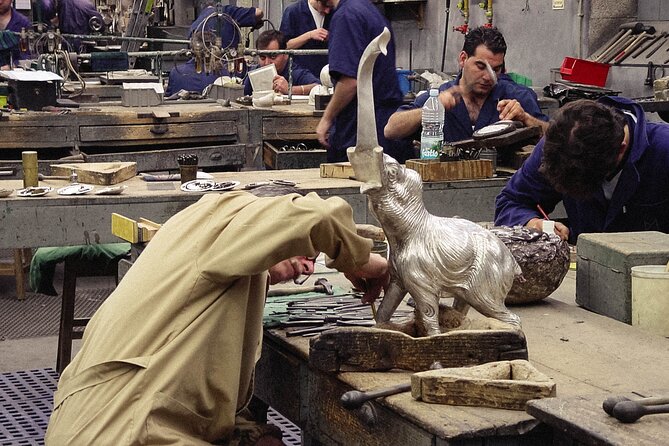
In central Porto, Alcino Silversmith makes the past feel close at hand: this is a working silver workshop with a history stretching back to 1902, not simply a display of finished objects. In an hour, you’ll hear how six generations of the same family shaped the business and see traditional methods alongside newer equipment.
I like two things in particular: you can get close to the artisans and their work, and the showroom presents silver in three rooms set up like parts of a home. One consideration: an hour goes quickly, and this is a craft-focused visit, not a hands-on class with a finished piece to take away.
At a glance
- A Porto workshop dating to 1902: Alcino is a family business now in its sixth generation.
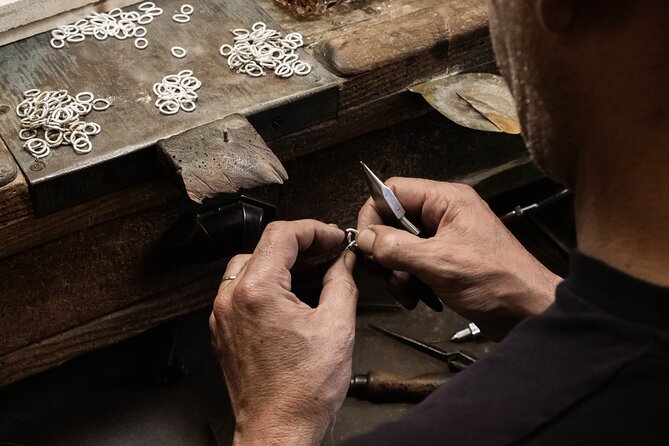
- Watch silverwork in progress: The tour covers manual techniques such as casting, molding and chiseling.
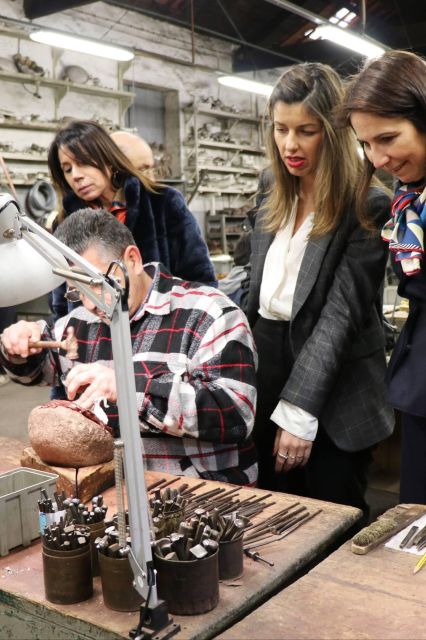
- Get involved locally: You may interact with artisans and assist in their work process.
- See silver in a domestic setting: The showroom has three rooms arranged to suggest decorated rooms in a house.
- Small group, short visit: Tours last one hour and are limited to 10 participants.
- Plan for weekday timing: Monday to Friday, the last entry is at 5:00 pm.
A working silver workshop, not just a display
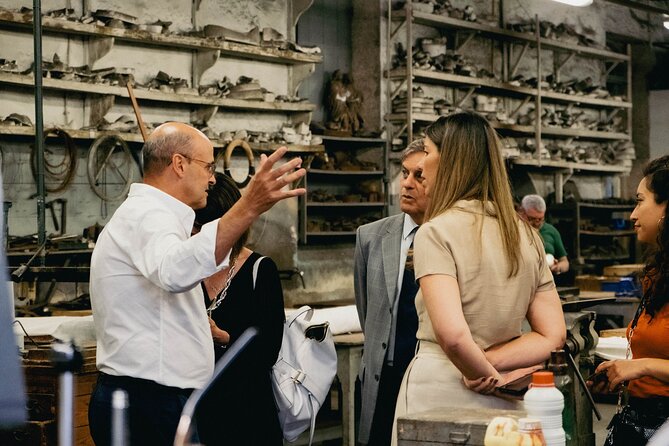
Alcino Silversmith’s story begins in 1902. Six generations later, the family business still makes jewelry, decorative objects, religious items and cutlery. That continuity gives the tour its central appeal: you’re not only looking at silver behind glass, you’re entering a place where the craft is still practiced.
The visit is a guided walk through the workshop and the company’s history. You’ll hear about the work and the methods used to turn silver into finished pieces. The tour is offered in Portuguese, English and Spanish, and its small-group limit of 10 should make it easier to follow the guide and see what’s happening in the work areas.
Expect a focused introduction rather than a long technical course. The hour is enough to show you the different stages and explain why hand techniques still matter, but it won’t make you a silversmith. If you’re curious about how objects are made, that short, direct look can add a useful new layer to a Porto visit.
More hands-on workshops around Porto:
- Porto: Pastel de Nata Pastry-Making Workshop
★ 4.9 · 1,542 reviews - Porto: Pastel de Nata Cooking Class with Port Wine – Sé
★ 4.8 · 888 reviews - Porto: Small Group Surf Lesson with Transportation
★ 4.9 · 594 reviews
From silver to finished work
The tour introduces several manual goldsmithing techniques, including casting, molding and chiseling. These are not just names to memorize. They help explain how raw material is shaped and refined, and why different tools and methods are needed to make pieces with distinct forms and details.
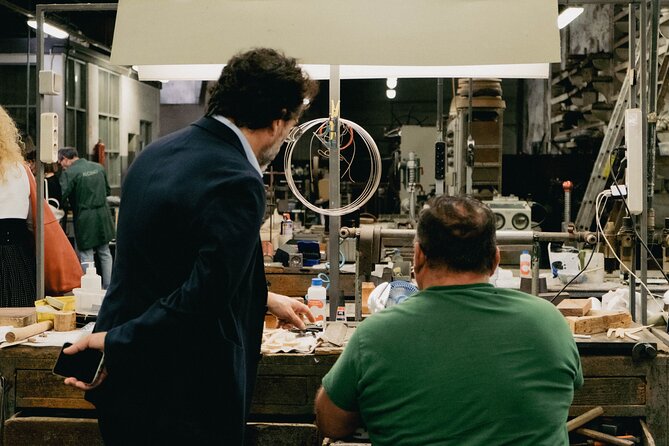
You’ll also get a look at the workshop’s process as artisans create silver objects. The opportunity to interact with them and assist in their work is a valuable part of the visit. It makes the workshop feel less like a museum exhibit and more like a craft business in motion. The exact task you might help with is not specified, so treat this as a chance to engage with the process, not a promise of a set project.
One especially interesting feature is the mix of old and new. The workshop retains traditional methods and equipment, while some newer, high-tech equipment has also been introduced. That contrast helps tell a fuller story than a display of old tools alone: a family craft can keep its habits and standards while still adapting its workplace.
The workshop setting is also a reminder that skilled handwork takes time. A finished silver object may look simple at first glance, but the techniques behind it demand care and control. Watching the work in context can make you notice small details in jewelry and decorative pieces that you might otherwise pass over.
A family history told through objects
Alcino has operated for 120 years and six generations, and the guide explains the company’s history as part of the tour. That context matters because family workshops often preserve knowledge through practice, not just written records. Here, the business history is tied to the objects it continues to make.
The range includes jewelry collections, decorative pieces, religious items and cutlery. The company is also recognized as an Entity of Historical Interest. That designation points to a business with significance beyond its sales, though the visit remains grounded in the craft itself: what is made, how it is made, and how the workshop has carried its work forward.
Religious silverwork is a particularly distinctive part of the collection. The description of the business includes sacred art and religious items, alongside the more familiar categories of jewelry and table pieces. Even if you aren’t shopping for silver, seeing these different uses together gives you a sense of how broad the craft can be.
I’d pay attention to the guide’s explanations rather than trying to absorb every detail at once. Some visitors may be more interested in the family story; others will want the practical sequence of techniques. The tour is offered in three languages, and guides can adapt their explanations to a visitor’s level of English, which may help if you’re following a second language.
Three rooms of silver in the showroom
After the workshop, the tour includes Alcino’s showroom, divided into three rooms with different environments. Each is arranged to simulate a room in a decorated home, using silver objects as part of the setting. This gives you a different way to see the work: not only as individual pieces, but as objects meant to live in everyday or ceremonial spaces.
The change of setting is useful. In a workshop, your attention goes to tools, materials and process. In the showroom, you can step back and look at the finished pieces as objects of design. The arrangement also helps you imagine how silver might fit into a home, rather than treating it as something reserved for a display case.
The showroom includes some of the company’s finest work, and the broader collection spans jewelry, decorative pieces, religious objects and cutlery. If you have an interest in design or craftsmanship, leave a little mental space for this part of the visit. It is the natural counterpart to seeing how the objects are made.
There is also a store, and access is included. Buying something is entirely optional. The experience is a better fit if you’re interested in the craft whether or not you plan to shop; the showroom and store let you browse, but the workshop visit is the main event.
More around Porto worth booking
- The Unvanquished Tour in Porto City Center
★ 5.0 · 26,497 reviews - From Porto: Douro Valley w/ Boat Tour, Wine Tasting & Lunch
★ 4.7 · 19,061 reviews - Complete Douro Valley Wine Tour with Lunch, Wine Tastings and River Cruise
★ 5.0 · 12,920 reviews - Porto: Live Fado Show with Glass of Port Wine
★ 4.8 · 6,498 reviews
Is one hour worth $17?
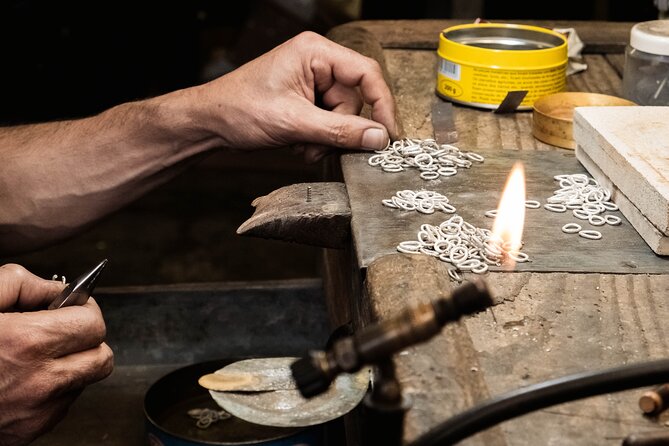
At $17 per person, this is a modestly priced way to see a working craft business in central Porto. The ticket includes entry, a guided tour, access to the workshop, showroom and store. You’re paying for more than a quick look at finished objects: the guide connects the company’s long family history to the techniques and work you see on site.
The strongest value is the combination of workshop and showroom. You can learn about how silver is made, then see the result in a setting that gives the pieces more context. If you’re choosing between this and a general museum visit, think about what you want from your hour. This tour is for close-up craft, a family business and a specific Porto tradition, not a wide survey of the city’s history.
The short duration is both an advantage and a limit. It slots easily into a day of sightseeing, and a group capped at 10 helps keep the visit manageable. But if you’re deeply interested in silversmithing, you may want more time for questions than the one-hour format allows. Go in with a few things you want to know, such as how the techniques differ or which kinds of pieces are still made by hand.
The experience also suits people who like seeing real work methods. A visitor described it as a chance to see handmade silver production, while another found the contrast between traditional work and newer equipment especially interesting. That balance is a good reason to visit: the workshop is not preserved as a frozen relic, but it does retain methods that make the company’s history tangible.
Practical details before you go
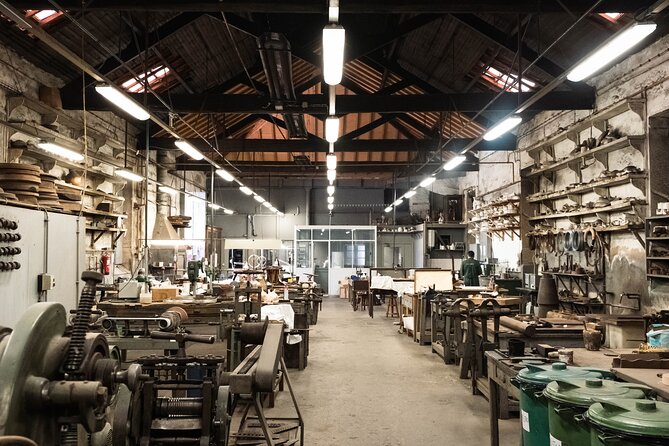
The meeting point is the Alcino Silversmith jewelry store. You can enter when your booked time arrives or call the business. Starting times depend on availability, so check the schedule before planning the rest of your day around the visit.
Tours are available in Portuguese, English and Spanish. Children must be accompanied by an adult. The activity is wheelchair accessible, and groups are limited to 10 participants. On weekdays, the last entry is at 5:00 pm, so don’t leave it until late afternoon without checking the available time.
Alcohol and drugs are not allowed. You can reserve now and pay later, and cancellation up to 24 hours in advance qualifies for a full refund. These flexible terms can help if your Porto plans are still shifting, but do confirm the details when booking.
Who should book the Alcino tour?
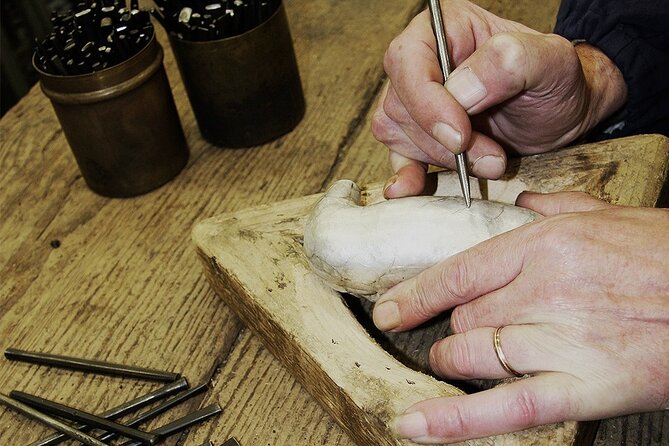
I’d recommend this visit if you enjoy craftsmanship, family businesses, decorative arts or the practical details behind objects you see in shops and museums. It also makes a good choice for a short activity between larger sightseeing stops, especially if you’d rather see a working trade than spend another hour looking at finished displays.
It may be less appealing if you want a long, hands-on workshop or a guaranteed chance to make your own silver piece. The tour offers interaction and the chance to assist artisans, but its main purpose is to show you the workshop, explain the methods and introduce the showroom.
For the price and one-hour length, the combination is persuasive: a century-old family business, real production, several manual techniques and a three-room showroom. Book it if you want a close look at how Porto’s silver craft is made and displayed. Skip it if your priority is a full craft class or a broad historical tour of the city.
FAQ
How long does the tour last?
The tour lasts one hour.
How much does it cost?
The listed price is $17 per person.
What languages are available?
The live guide speaks Portuguese, English and Spanish.
How many people are in each group?
Groups are limited to 10 participants.
Is the tour wheelchair accessible?
Yes, the activity is listed as wheelchair accessible.
Can children attend?
Yes. Children must be accompanied by an adult.
What is the latest weekday entry time?
From Monday to Friday, the last entry is at 5:00 pm.
Just in around Porto
- Porto : Private Tour of the Historic City in a Classic Ford T★ 5.0 · 13 reviews
- Workshop Nate Pastel and Cocktails in Porto★ 5.0 · 64 reviews
- Pastel de Nata Workshop in Porto★ 5.0 · 127 reviews
- Private Tour to Lamego and Viseu, the Dão wine region★ 5.0 · 3 reviews
- Douro Valley Private Day Trip including Boat Ride & Wine Tasting★ 5.0 · 96 reviews
- Porto City Tour with Wine Tasting★ 3.5 · 30 reviews
- Paiva Walkways & Arouca Suspension Bridge – All Inclusive!★ 5.0 · 62 reviews
- Adventure Paiva Passages: Suspension Bridge and Picnic | Porto★ 4.5 · 4 reviews
Porto Tours, compared.
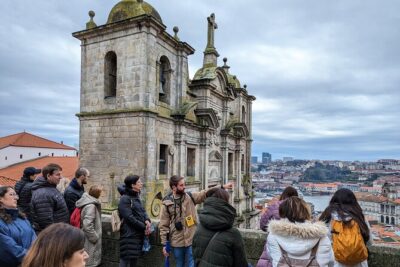

Douro Valley w/ Boat Tour, Wine Tasting & Lunch
Read our review →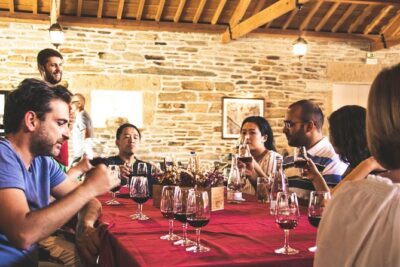
Complete Douro Valley Wine Tour with Lunch, Wine Tastings and River Cruise
Read our review →



Guided Tour by Tuk-Tuk & Optional Douro River Cruise
Read our review →